

Where does it come from?
Gamay – or Gamay Noir à Jus Blanc for its full name – is a very old grape variety. It is the natural offspring of two even older varieties, the well-known Pinot Noir, and Gouais Blanc, omnipresent in the Middle Ages, but which today is found almost exclusively in the… Upper Valais (under the name Gwäss).
Gamay had a complicated start: in the 14th century, it incurred the wrath of the Duke of Burgundy. The aptly named Philip the Bold disliked this highly productive grape variety – a very compelling characteristic at the time – especially since his own estates were covered with the difficult Pinot Noir. Wine was also an instrument of power, which Philip intended to maintain.
The Duke then made a decision that would change the face of the region. In 1395, he decreed " that the very disloyal and very bad vine of Gamay, from which bad vine comes a great abundance of wine, must be uprooted." Gamay was pushed further south, between Mâcon in Burgundy , where it can still be found to some extent today, and in Beaujolais , as far as Lyon.
This decree, whose political motives remain unclear, still weighs heavily on the reputation of Gamay today. But Philip the Bold is not the only culprit: Beaujolais Nouveau, a young wine released on the third Thursday of November, has also damaged its image.
Launched in the 1960s, this particular style, quickly becoming a victim of its own global success, was produced hastily, without regard for quality. Today, the quality-focused approach proves that Beaujolais Nouveau has its rightful place, and above all, that Gamay is not a bad vine that should be eradicated.
Where is it located?
As we've said, Gamay is the grape variety of Beaujolais, between Mâcon and Lyon. It's also found in the Loire Valley and in Savoy. So it's mainly found in France, but the other country that has made it a true specialty is Switzerland. Hooray! (Well, actually: Moo!)
It is the third most important red grape variety in Switzerland, with over 1000 hectares in 2024, distributed almost entirely between, in order, Valais , Vaud and Geneva. It is an essential ingredient in Dôle wine.
It is also found in the Canton of Vaud under a very specific name: Plant Robert, sometimes written Plant Robez or Robaz, as it was long ago. This term could come from "dérober" (to steal). We won't name names, because the statute of limitations has expired, but someone must have smuggled some Gamay vines back from Beaujolais…
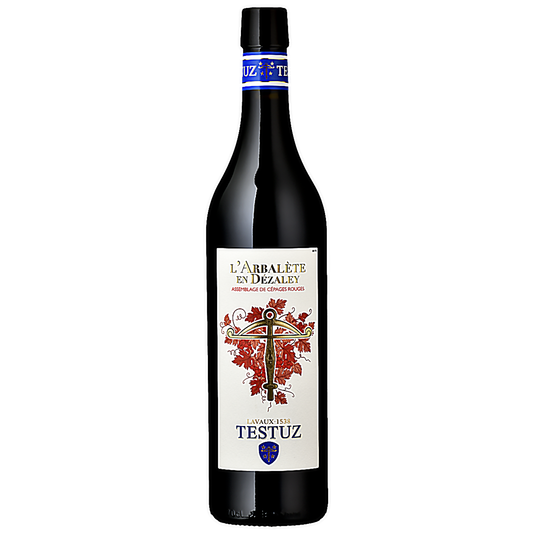
Documented in the 19th century, but probably older, this type of Gamay has developed its own name and its own personality in our region. It has become a symbol of Lavaux, protected by a charter and subject to precise specifications.
What does it give to the vine?
Gamay is an early-growing grape and susceptible to disease. Fortunately, it ripens early, before the weather deteriorates in autumn. Naturally very productive, it needs to be managed carefully to ensure it produces beautiful, rich, and intensely flavored fruit.
Rocky, poor soils suit it well, particularly granite, as found in the famous ten Beaujolais Crus and the Martigny-Fully area, for example. Despite climate change, this grape variety manages to retain all its vibrancy, an important characteristic for making easy-drinking, digestible wines. An asset that has made Gamay famous!
What kind of wines does it produce?
Gamay produces fruity red wines with great freshness and supple tannins. It has notes of red berries, including cherry, raspberry and strawberry, often underscored by a touch of pepper or violet.
In a light, crisp, and very affordable style, here it is in red and rosé .
In blends, especially with Pinot Noir, it gives rise to Dôle , or many other characterful reds, high-end with the Cuvée Unique Gamay, Gamaret, Divico , or essential in the Cure d'Attalens Rouge .
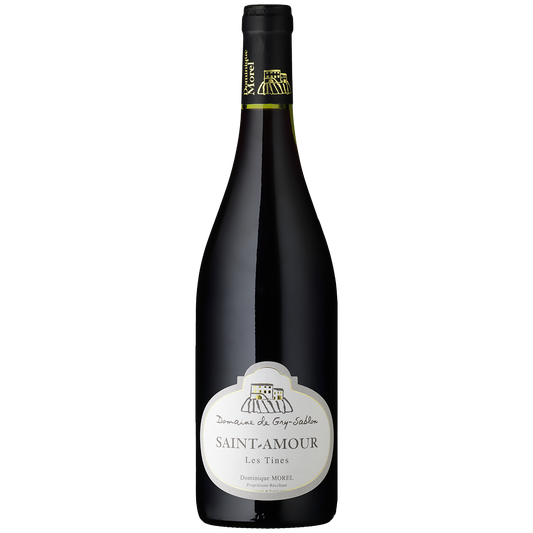
It shines in the ten Crus of Beaujolais, with evocative names, such as this Moulin-à-Vent "Vieilles Vignes" from Domaine de Gry-Sablon or this Saint Amour , from Domaine de Gry-Sablon.
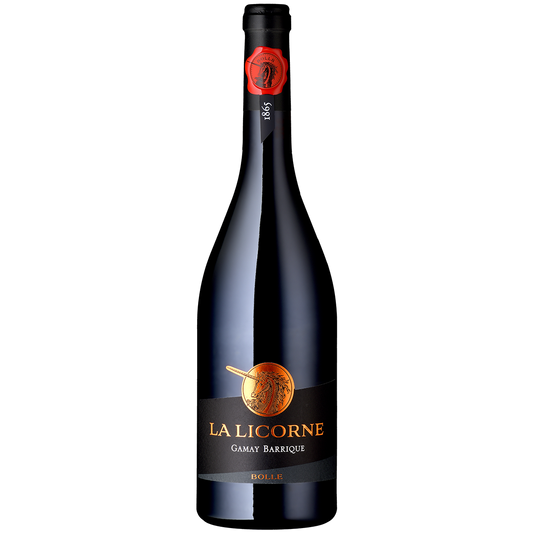
Gamay can do everything, in all styles, in natural mode, or with a beautiful aging in new wood, as in the Licorne Gamay Barrique .
The Plant Robert is an emblem of Lavaux, but rare examples can also be found elsewhere, such as on La Côte at the Domaine de Autecour.
Furthermore, would you like to discover another old Gamay vine with a strong personality? Taste the Gamay d'Arcenant , from Château de Chatagneréaz, where the Gamay is accompanied by its children Gamaret and Garanoir .
What does it go with?
Gamay is the ultimate in easy-drinking! When you want red wine but don't know what to open, choose a Gamay! It's a grape variety that guarantees immediate enjoyment. Plus, it can be served chilled, in summer for example, which isn't the case for all reds.
It will shine especially with poultry and charcuterie, whether hot or cold. Think of our local specialties, such as Vaudois sausage and boutefas (a type of sausage), cabbage sausage, and papet vaudois (a type of potato and leek stew). But also mushroom dishes, or even quiches. A Gamay is always a cheerful choice!